End of an era: the closure of Par Avion Flight Training
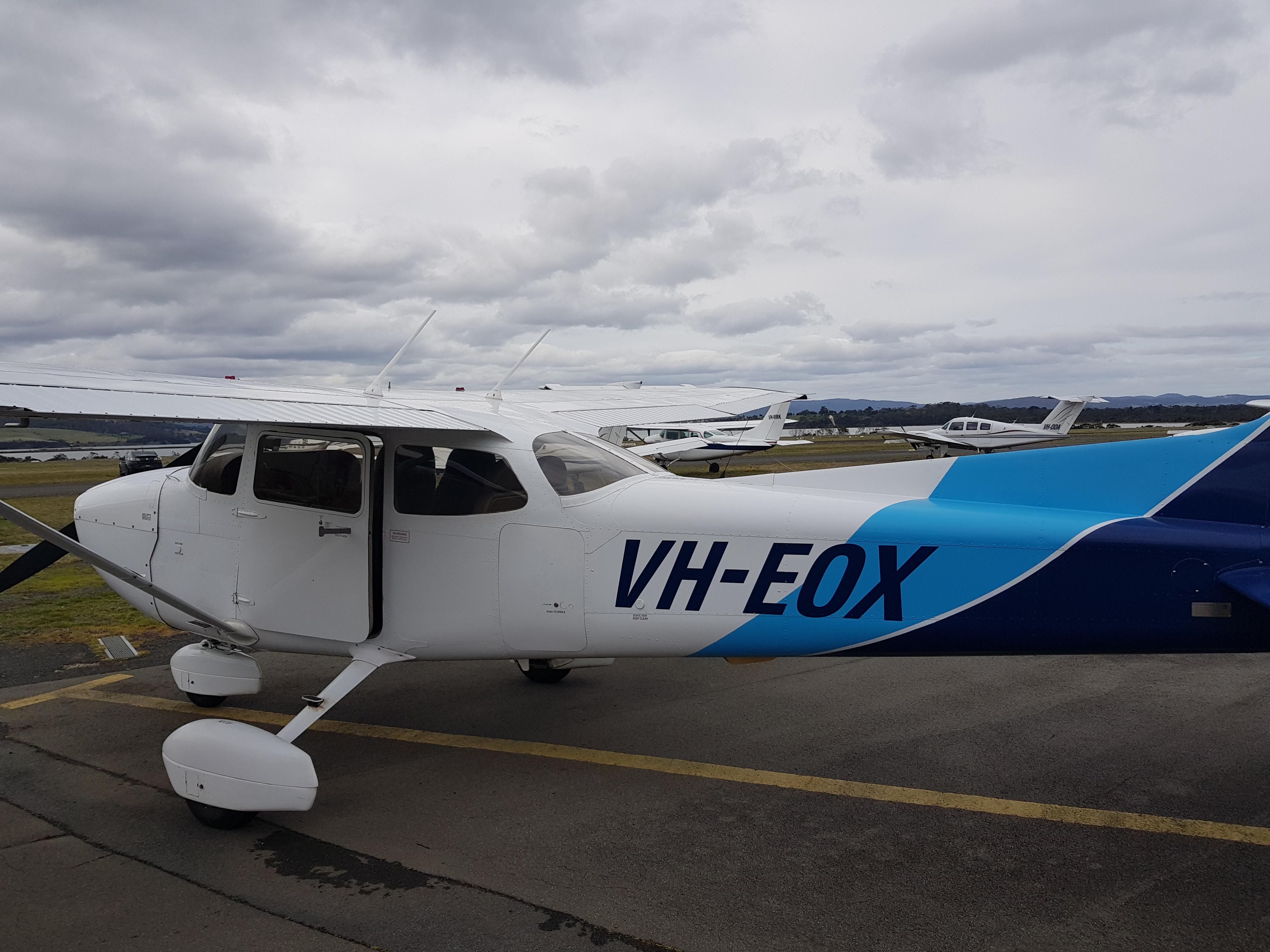
Seeing the hangar at Cambridge Airport empty was a poignant moment. Gone were the much-loved and well-maintained Cessna 172s. No doubt it will have other aircraft inside soon, possibly helicopters, but the training aircraft have gone.
Pilots, bushwalkers, and tourists may be familiar with the old aircraft. There was Cessna 172 TSR (the ‘TSR’ is a callsign - a unique identifier used when talking with Air Traffic Control), which was a favourite for many pilots. Its flying character seemed perfectly matched to an elegant callsign, TSR Tango Sierra Romeo. It had a twin sister, TSP, which didn’t quite have the same feel for me as TSR but was equally well maintained and reliable.
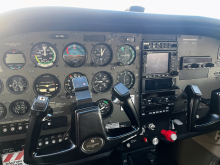
Other pilots will have their favourite aircraft. There were the more recent versions of Cessna 172s, like USQ and PRJ with more modern flat-screen displays, albeit still on a 20-year-old aircraft. More recent purchases for the flight school were EOK and EOX. The latter callsign never rolled off the tongue for me. It often came out as an Aussie slang variant like ‘Echo Ocker Xray’, as the instructor chuckles in the right-hand seat. These were aircraft that eased the workload on cross-country navigation flights and provided familiarity with glass panel displays and more current avionics. They also had autopilots, which, mostly, worked.
They occasionally transported bushwalkers and visitors to Bathurst Harbour. They also supported sightseeing flights and regular whale surveys for the Tasmania Parks and Wildlife Service.
Of more significance than the sale of aircraft is the loss of a team of flight instructors at Par Avion. The instructors were very well-regarded and had a depth of knowledge about flying conditions in Tasmania, which can be amongst the more challenging in Australia. These are instructors who not only knew how to teach someone to pilot an aircraft but could tell you when to expect a sink or a lift when coming in to land or where to look for a particular rock, wombat hole or fence line on an isolated airfield. They could also instil confidence in how to interpret the often-complex aviation weather. Par Avion also had established connections with landowners to allow the use of their airfields for training flights. Thank you to the landowners in locations including Jericho, Lemont and Lagoon Bay.
Most of the instructors will have already moved on to other roles around Australia, perhaps piloting for commercial airlines or the Royal Flying Doctor Service.
A common expression is that flying is a ‘perishable skill’, requiring consistency and regular reviews. It may still be possible to arrange a biennial flight review (a compulsory requirement for all pilots), however, this is uncertain, and aircraft availability will be a factor if they are all sold. They may hold on to one or two, which would be good news.
It is difficult to come to terms with the closure of a flight school as a private pilot, but the greater issue is for students part-way through their training, and for young people hoping to live near home and undertake pilot training. There have been other educational and training opportunities lost recently in Tasmania such as creative design at TasTAFE, so the closure of the flight school is a further addition to the list. The closure hits hard though and is difficult to fathom.
It is hoped that a new flight school may eventually be established but it may take years. The fear is that with a loss of instructors (and a loss of momentum and goodwill), it will be difficult to rekindle flight training in southern Tasmania. There will be several cohorts of young pilot trainees who will be looking elsewhere. Aviation has always been integral to Tasmania's 'island identity' and economy, and without a training pathway here, future pilots will have to look to the mainland for opportunities.
Running a flight school in Tasmania must be a challenging business, although the combination of tourism/bushwalker flights and pilot training provided by Par Avion appeared to have useful synergies, and full credit to its management, it worked for many years. Despite the recent extreme Spring weather, for most of the year conditions are often ideal for flying in Tasmania. Par Avion Flight Training was a viable business and appears to only have been closed due to space issues for aircraft. This could have been anticipated during the procurement process for air rescue services. It appears to have been an unintended consequence that came as a surprise to staff and students.
Given enough startup capital, there will be solutions to create a viable flight school in the future. This may include investment in a mix of modern aircraft as well as flight simulators. The State Government could choose to support this.
To the instructors and support staff at Par Avion, thank you for the years of dedication to training pilots.